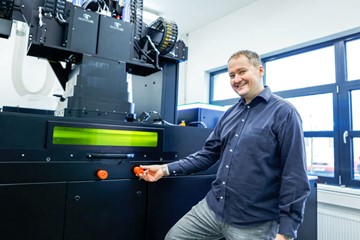
Michal Zemko: “Any cluster gives its members exactly as much as the members themselves are active.”
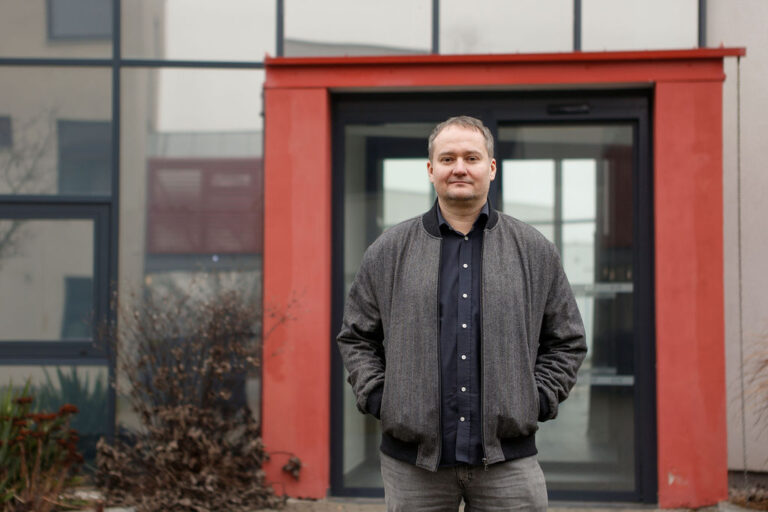
In the interview with Michal Zemko, President of the Executive Board of the MECHATRONIKA Cluster and Executive Director of COMTES FHT, you will learn how a young technologist from Košice became the leader of a top research organisation. He also explains why clusters make sense for companies and why, in his view, a simple rule applies: a cluster gives its members exactly as much as the members themselves are active.
Michal Zemko – a technology enthusiast, President of the Executive Board of the MECHATRONIKA Cluster, and Executive Director of the successful research organisation COMTES FHT a.s., which has been a member of the Klastr MECHATRONIKA since September 2015. In this interview, he reveals how his journey led him from Košice to Dobřany, which high-profile clients COMTES FHT works with, and why being a member of a cluster makes sense to him.
Michal, you have been working at COMTES for quite a long time. How did you actually get that job?
My journey started in Košice at the Technical University, where I studied at the Faculty of Metallurgy. The university – or rather my professor Tibor Kvačkaj at the Department of Metal Forming – cooperated with COMTES. One day he asked me whether I would like to take a trip to Plzeň for a meeting about a joint project, so I went to have a look. That was the first time I visited COMTES in Plzeň. We stayed at the Škoda Hotel on Českých bratří Square, near Borská Street where the first COMTES office was located. That first visit allowed me to experience the atmosphere. I really liked the dynamics, the enthusiasm, and the effort to solve industrial problems and find solutions. The next step came a year later, when I needed calculations for the practical part of my master’s thesis. I had always been inclined toward modelling and computer simulations. At that time simulation software was not available in Košice, but COMTES had it. So it was partly my own initiative. However, Professor Kvačkaj played a key role, as he arranged a three-week internship for me so that I could work with those simulations.
When was that?
The first visit took place in 2002, and in 2003, I returned for the internship. I was given a lot of space by the COMTES management, specifically Zbyšek Nový and Libor Kraus, and I came to the office as if it were my regular job. I was getting familiar with the computational tools – that was the only thing I needed to do – and I really enjoyed it.
Back then COMTES was exceptional already because it had modern technologies that were not available elsewhere, right? What makes it exceptional today?
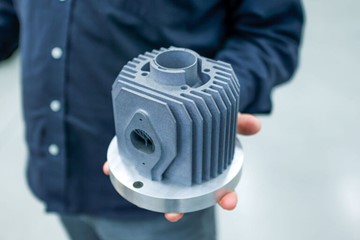
Yes, I confirm what you are saying. It was certainly innovative from the very beginning. The use of simulation was not very common at that time. I do not know whether they were the first in the Czech Republic and Slovakia, but they were definitely among the first. And it is still innovative. Specifically, I would mention non-standard and specialised methods for testing metals, metal 3D printing, and the possibility to prepare materials “tailor-made” in terms of chemical composition, properties and shape. Every technology has something special about it. With metal 3D printing you can buy a printer and print something, but the key is to figure out how to adjust parameters and achieve properties suitable for a specific purpose. That is the unique part, and simulation helps with that. The ability to design materials that can then be used for various applications. Today the services and products from COMTES are relevant for many areas of industry – engineering, aerospace, automotive, healthcare, but also the consumer segment such as electronics or watchmaking. I think that is quite exceptional.
“The most exclusive services interest only a few companies globally”
You mentioned several different sectors. Would you say that companies who could potentially use your services already know about you?
There are two areas of innovation. One is the technical one, which I have already mentioned. The other can be process-related, administrative or business innovation. And that is probably where this question is heading. We operate purely in business-to-business cooperation, B2B, we do not provide services to the general public. The commercial and marketing tools for this type of operation are different. Mass online marketing, telemarketing and similar approaches do not work for us. In fact, they cannot work, because the most exclusive services interest only a few companies worldwide. Building a good reputation is a gradual, long-term activity that brings the best results. I will give some examples. In the research field these include publications and participation in conferences, where contacts are established and reputation is built. Another area is cooperation with universities, research organisations and industrial companies. Participation in international projects is also very important for visibility, as is membership in various professional organisations and clusters. That is another factor that greatly helps to raise awareness of our activities. If we look at it locally, there is cooperation with the region and the city, thanks to which we meet with surrounding companies and also with primary and secondary schools. I think the most important thing is to have a comprehensive package of all these activities.
One thing is building a good reputation and brand, another is business and acquiring contracts and customers. I am interested in where COMTES obtains its largest contracts. Does your reputation come before the business?
Today, after 25 years of activity, the proportion of customers who approach us without direct sales activity is increasing. For example, a Formula 1 team may contact us asking to test something. That is nice. However, direct marketing obviously also works – we come up with a new service and try to offer it to existing partners or selected companies that might be interested. For example, when it comes to trade fairs, recently we have almost completely stopped having our own stand. For us, a trade fair is an opportunity to arrange B2B meetings and visit the stands of potential or existing customers, but also suppliers, because without investments and purchasing new equipment we would not be able to offer competitive services.
When you mentioned that you carried out material testing for a Formula 1 team, I wondered whether you have strong competition in the region, in the Czech Republic or internationally. How many companies could a Formula 1 team contact with a request like the one they sent to you?
Of course there is some competition, but we have to distinguish between segment and region. COMTES is a research organisation focused on materials research, technology development and metal processing. It offers a number of basic services that are similar to those provided by all materials-oriented universities, other research institutions and specialised companies. Such services are an important part of more complex projects, but on their own they are usually used only by nearby companies. Likewise, we have various facilities used for top-level research that can also be used for more routine services or activities. But even here it applies that, for example, heat treatment or standard testing is not carried out over long distances, only locally. In this segment we have competitors in the region and within the Czech Republic, but these are mostly services with lower added value.
And what about those with higher added value?
There are also much more specialised services, such as measuring material data, developing material models for calculations, technology development, and the design and prototype production of special materials for various applications. These services can operate on a broader scale. For us that mainly means German-speaking countries and the entire Czech Republic. In this area we encounter another group of mostly foreign competitors. Let me give one example: we develop rolled sheets for a manufacturer of high-tech audio equipment. They design a very precise chemical composition of the sheet from which they then manufacture components for sound amplifiers. Our offer – the ability to achieve precise chemical composition in the required dimensions in relatively small quantities – is essentially unmatched in the wider region. A third group of services has such excellence that we can offer them on the global market. This includes advanced characterisation of small components and 3D printing of special alloys with specific structures and properties. That is something that can truly be described as unique. We publish it first in the world and standards are created based on it. These are the areas at the very top of the pyramid where there is essentially no competition. However, in terms of volume and turnover they are not the largest. The largest volume lies in the middle – specialised services that appeal to a wider regional market.
Which would probably apply to most companies – their business does not rely on the most expensive and cutting-edge product because there are not that many customers?
Yes, that is the Pareto principle. The most advanced products are not purchased by a very large number of customers, or large volumes are not needed. For example, how much material is used in one luxury mechanical watch? We prepare a high-quality material with the properties required so that the watch does not last two years and stop working, but essentially lasts forever. The watch has a certain price, so the semi-product also has a price, but when only a few grams are used per watch it does not significantly affect turnover. It is something you can showcase, publish and build your reputation on. If I say that the research can also be used elsewhere, this is an example – the tip of the iceberg. Another similar segment is healthcare and implants. Similar technologies are used there as in watchmaking and the same principle applies. Many people know dental implants – a small screw weighing a few dozen grams – but anyone who has experience with dental implants knows how expensive they are.
Does it ever happen that a specific project for a premium client leads to a completely new process that you can use further and possibly even push the whole field forward?
It does happen, but honestly it is rarer than we would like. Customers and partners often approach us with very specific requirements that are not easily transferable to the conditions of another manufacturer. Another important factor is confidentiality agreements and arrangements about what we are allowed and not allowed to do with the results. I also mentioned the watchmaking industry and a Formula 1 team without naming specific brands, because that is something I cannot disclose.
If I asked about the most interesting customers regardless of contract volume, which ones would you mention besides the confidential Formula 1 team and the unnamed Swiss watch manufacturer?
Apple, Boeing, Volkswagen, Škoda Auto, Škoda Transportation, Škoda JS.
“Large industry starts at 20 tonnes and above”
So you clearly have impressive customers.
I think we have a stable portfolio of customers who have been with us for years, and every year new ones appear, just as some collaborations also end. The structure of our customers reflects the structure of services I mentioned earlier. We have regional customers who purchase the more standard services. The portfolio is different for the sophisticated services, where customers cooperate with us for added value. That added value may be delivery speed, which is very competitive in our case and can be an important factor. Then there is reliability and quality. Complaints occur maybe once or twice a year, sometimes not at all. Sometimes it is simply the exclusivity.
If someone needs a specific alloy in a specific shape – even without our research, just for practical use – there are not many companies in Europe capable of casting special materials and then processing them into the required form. Or the order does not interest them if it is “only” one tonne. Real large-scale industry methodologically starts at 20 tonnes and above. COMTES can prototype in a melting furnace capable of casting approximately 450 kg of steel. So if someone needs one tonne, that means three melts for us. We perform the melts and process them into the final shape and required properties. Other research institutions – university, academic or otherwise – usually have much smaller melting capacities, in the range of kilograms or tens of kilograms at most, which is not sufficient for industrial use. It is suitable for quick and inexpensive searching for new material concepts, but not so practical for real applications.
Does it ever happen that someone knocks on your office door asking to test something and you pull out a metal 3D printer from a drawer?
That usually happens within outreach activities and cooperation with schools. For example, secondary school students who are starting businesses sometimes come to us needing certain tests for their clients or for school projects. Very occasionally a hobbyist contacts us asking for help with something they are building, but that is only from the immediate surroundings and often as a result of our outreach activities.
COMTES is based in Dobřany, where your company is quite well known and locals appreciate having such an employer. You recently celebrated your 25th anniversary with a big event for the public. You yourself are proof that COMTES can attract employees even from Košice.
I think the relationship with Dobřany is mutually beneficial. Over the years several mayors have served in the town and we have had excellent relationships with all of them. Dobřany is a relatively small town and although there are other companies there, COMTES is a significant player in terms of size. It seems natural to us that if we operate somewhere and many of our colleagues come from that place, we have a certain co-responsibility for the functioning of the community. We support cultural activities – for example the Dobřany Children’s Orchestra Macarát rehearses in our hall. Various social events take place there, we cooperate with the local primary school, we run a 3D printing club, we cooperate with firefighters, and part of a kindergarten is located in our building.
You are a big technology enthusiast. Tell me what trends are currently influencing materials processing, metals and materials engineering in general.
I would say that today it is more a combination of trends. It is difficult to single out just one with the greatest impact. All these trends aim at three main goals: increasing the efficiency and stability of processes, improving energy efficiency and sustainability, and moving towards materials and processes designed directly for specific applications. These goals are achieved through various interconnected tools. Stability is based on understanding the process, monitoring parameters and predicting what will happen. In the past this relied heavily on the know-how of individuals who held all the knowledge about a project or process. Today these people are disappearing and their role is being replaced by digitalisation and AI. If I can measure relevant data, it becomes easier to detect deviations from the norm and take corrective action – whether in production or quality control. Stability is therefore strongly connected to data. When we talk about process efficiency and translate it into productivity, it means producing more products in a unit of time at lower cost. Lower costs also require energy efficiency, which brings us to energy and environmental considerations.
Would it be fair to say that this is essentially the core of COMTES’s business? That thanks to your products clients achieve greater efficiency?
That is certainly what we strive for. In terms of materials, I already mentioned the area of production tools and equipment. This is a very strong segment where COMTES operates – both through classical metallurgy, meaning the preparation and heat treatment of tools by traditional methods, and through the rapidly developing field of additive technologies and 3D printing. In this area we have globally unique results and our tools achieve several-fold increases in lifetime compared to conventional ones.
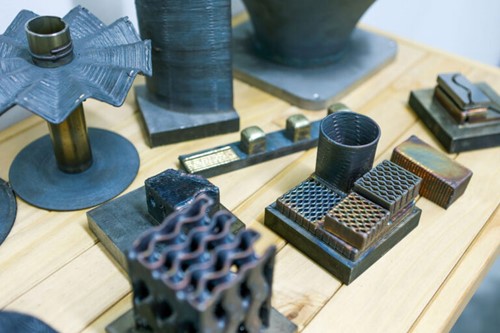
You mentioned additive technologies, which represent a very sustainable form of materials engineering, right?
From the perspective of materials engineering, COMTES designs sustainable technologies even in traditional fields such as forging. The aim is to minimise waste from semi-products when manufacturing final products. Additive technologies are a typical example – almost only the material that becomes part of the product is used. It is not completely 100%, some losses occur during printing, but they are minimal. Sustainability and efficient material use are major megatrends in the EU. I am proud that COMTES contributes to these goals through its activities.
And I will put in the headline that COMTES is a megatrend! In the Dobřany Science and Technology Park, where COMTES is located, the MECHATRONIKA Cluster is also based, and you serve as President of its Executive Board. Were you there when it was founded?
COMTES did not found the MECHATRONIKA Cluster and was not among its founding members. The cluster was established in 2011 and COMTES became a member around 2018. At that time we were considering further opportunities to engage in additional activities, the structure of members made sense to us, so I applied and became a member of the executive board.
“Any cluster gives its members exactly as much as the members themselves are active”
What do you see as the biggest benefits of membership?
Last autumn at the Cluster Day in TechTower I gave a short presentation on behalf of COMTES about what clusters bring to their members. The basic benefit is information service – whether newsletters, social media or direct communication from Executive Director Katka Podaná or other people in the cluster. For example, we received an invitation to speak at a conference in Bavaria. A colleague from COMTES, Professor Džugan, attended and it resulted in concrete cooperation. That is the basic level – information that can be used. The second area is Czech-Bavarian cooperation, which is a strong aspect of the MECHATRONIKA Cluster. For many years we have run a series of projects with Bavarian partners – originally mainly the Bavarian Mechatronics Cluster, but also universities and other organisations. Thanks to this cooperation COMTES has become a member of several consortia and significantly expanded its cross-border collaboration, which is another tangible benefit of the cluster. I would also like to mention support for education. The MECHATRONIKA Cluster has representatives in regional councils and organisations, so we receive information about what is happening in the region and, where possible, we can also participate in shaping regional policies and strategies. The benefit for different members may vary, but it always requires some activity. If I am a member of any association and only passively receive information, I may gain something but not the maximum. If I actively participate and engage, the benefits multiply. Any cluster gives its members exactly as much as the members themselves are active.
How do you imagine the MECHATRONIKA Cluster in 5–10 years?
We would be happy if we managed to maintain the current range of activities. The top priority is Czech-Bavarian cooperation. It works very well and maintaining it, perhaps expanding it slightly, is what I would like to see in five or ten years. At the moment this cooperation is at its historical maximum, so maintaining this level would already be a success. In terms of membership numbers, I can imagine moderate growth. The cluster is competence-oriented, so members include service suppliers for the broader field of mechatronics – component suppliers, integrators, automation providers, equipment suppliers such as laser technology companies or material solution providers. The common denominator is that we can competently supply and cooperate with “consumers of mechatronics”, which are usually large companies using mechatronic systems in their operations. This mechatronics portfolio is now complemented by secondary schools, the chamber of commerce and service providers outside the field of mechatronics, such as language services. It would make sense to expand the cluster to include additional service providers, whether in education or cybersecurity, who could extend their reach through cluster membership while making the cluster more attractive for companies operating in the broader field of mechatronics and related industries.
Am I correct in imagining that direct competitors can theoretically be members of the same cluster?
That happens quite commonly. It may appear to be a disadvantage, but the benefits of membership outweigh it. According to the European Commission, clusters should primarily serve small and medium-sized enterprises and help them develop further – not only technically but also in areas such as legal advice, cybersecurity and other business-related services. I do not mean incubation though, that is another level where support for start-ups is much more intensive. A cluster can also fulfil such a role, but at the moment we do not have members who are purely start-ups. Most of our members are companies that have already passed the initial stage. A cluster can act as a “friend on the phone” who understands the problems or needs of its members and can guide them, not necessarily by providing the service itself but by pointing them in the right direction.
Source: Klastr MECHATRONIKA
The interview was created as part of the Smart Accelerator of the Pilsen Region IV project.
Photo: Kristina Zejkanová