When Optics Connect: An Open Interview with the Manager of the Czech Optical Cluster, Petr Přikryl

The Czech Optical Cluster brings together leading research and industry players and is helping position Czech optics among the global elite. Read the interview with Petr Přikryl to find out what lies behind its success and where it is heading next.
What is the Czech Optical Cluster and why was it created?
The Czech Optical Cluster is a platform that connects companies, research organisations and educational institutions in the fields of optics, photonics and related technologies. It was established in 2017 out of a very practical need – people in the field realised they faced similar challenges but were addressing them individually. The cluster aims to be a place where research meets industry, where experience is shared, and where joint projects can emerge that individual entities would often not have the capacity to carry out on their own.
Today, the Czech Optical Cluster has 44 members and covers a wide range of areas. What does this say about the cluster?
It mainly shows the breadth and strength of Czech optics as a whole. Optics here is not a narrow, isolated field, but a very diverse ecosystem where companies and institutions from different segments meet – from lighting technology, consumer and industrial optics, microscopy, to advanced laser and quantum technologies. Applications and technologies for the defence industry are also beginning to come to the forefront.
Today, the cluster’s 44 members employ more than 35,000 people in total, which is a figure that cannot be overlooked even at the national level. At the same time, it is an advantage – different areas of the field can inspire each other, explore new applications, and respond to technological and market changes much more flexibly than if they were isolated.
What does the cluster offer its members today?
I would say mainly connection and context. We bring together the key players in optics. Thanks to the cluster, members gain access to contacts that would otherwise be very difficult to reach – whether researchers, other companies or international partners. At the same time, the cluster helps them navigate what is happening in the field: trends, challenges, funding opportunities, or labour market needs.
We create an environment where members from science and industry can establish contacts, share experience and knowledge, which facilitates the creation of new business and research partnerships.
The cluster does not offer a “turnkey service”, but rather a space for collaboration. Those who benefit the most are those who actively engage, share their experience, and are not afraid to bring their own topics. Often, ideas that later grow into concrete projects emerge from informal meetings.
How has the cluster evolved in recent years?
At the beginning, it was mainly about people in the field getting to know each other. Today, cooperation is much more concrete. We have completed joint projects, organised outreach activities for students, offered internships, cooperated with international clusters, and actively participated in strategic discussions about the future of the field.
The cluster has gradually become a respected platform with a voice not only in the Czech Republic but also internationally. For this reason, I was very pleased to be elected to the Stakeholder Board of the European technology platform Photonics21. It plays a key role in defining the EU’s research and innovation priorities in photonics, whether within Horizon Europe or in preparing the future FP10 framework programme. Being part of these discussions means having the opportunity to influence the topics that will be supported in Europe and ensuring that the needs of our research institutions, companies and the Czech ecosystem are taken into account.
You collaborate extensively with universities and research centres. Why is this so important?
The connection between research, academia and industry is absolutely essential for optics. Companies bring concrete needs and practical challenges, while research institutions contribute deep know-how and new ideas. Many leading institutes of the Czech Academy of Sciences are among our members. When these worlds meet, high-value solutions emerge, and at the same time, they contribute to better preparation of students for practice.
What do you consider the biggest challenge for optics in the Czech Republic?
In the long term, it is the lack of qualified people. Optics is a demanding but very promising field, and we need to do more to present it to younger generations. It is not enough to say it is important – we must show concrete examples, career paths and the meaning behind the work. The key solution is to link technical education to real industry needs.
For example, I would mention the EduBox know-how of the Moravian-Silesian Technological Academy, which inspired the EduTech OK project in the Olomouc Region, connecting schools, companies and public institutions. Thanks to cooperation between the Olomouc Region, the Czech Optical Cluster, the Autocluster, the National Pedagogical Institute, the Fort Science Centre of Palacký University, the regional office of the Confederation of Industry and Transport, and the Innovation Centre of the Olomouc Region, the project supports the development of a modern and sustainable system of technical education.
Popularising technical fields is a major topic and needs a comprehensive approach. Another good example is the long-term support for electron microscopy in the South Moravian Region, involving companies, universities and public administration. Together they create a platform to increase the attractiveness of STEM fields and organise events such as Electron Microscopy Days.
Where do you see the greatest opportunity?
In what we already have. The Czech Republic has a strong tradition in optics, high-quality research and innovative companies. In many segments, we already belong to the global elite, and the goal is to strengthen and maintain this position, while also creating conditions for other companies to gradually reach a similar level. The cluster can act as a kind of “connector”.
Another major opportunity lies in the growing interest in stronger European cooperation in today’s rapidly changing global context. Strengthening collaboration between European research institutions, industry partners, and clusters creates space for knowledge sharing, joint innovation, participation in international projects and strengthening Europe’s technological sovereignty in optics and photonics.
What role does international cooperation play in all this?
As I mentioned earlier, it plays a crucial role. Developments in optics are global and very fast. Thanks to international cooperation, our members gain access to new technologies, projects and markets. The cluster often acts as a first point of contact – helping establish partnerships and lowering barriers to entering international initiatives.
We are part of consortia of two Horizon Europe projects – PhotonQBoost and Laser-PRO – focused on photonics, lasers and quantum technologies. Through these projects, SMEs can obtain funding or reimbursement of travel costs for matchmaking missions. They gain new contacts. These collaborations also strengthen our relationships with partners from Finland, Lithuania, Poland, Portugal, France, Austria, Germany and Ukraine. In addition, we have signed memoranda of cooperation with several sectoral clusters in these countries, further intensifying these activities.
Can you summarise where the cluster aims to move in 2026?
2026 will be a very busy year for the Czech Optical Cluster – from international missions and workshops to the ambition of obtaining the Silver Label for cluster excellence.
We see 2026 as a year when we want to be more visible – internally and externally. On one hand, we want members to know each other better, understand each other’s capabilities and collaborate more naturally, not only on projects. That is why we are planning workshops, joint events and better tools for sharing information, for example, via our website or a new newsletter. We will introduce a new concept called “optical coffee chat” – online seminars on various interesting topics.
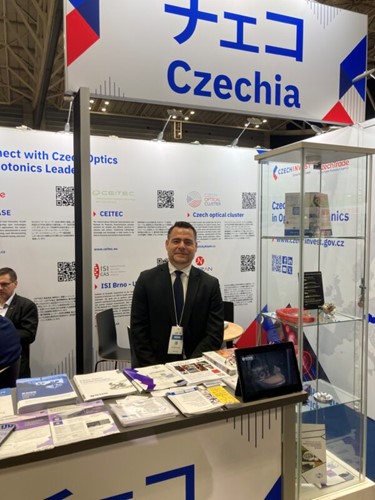
At the same time, we want to significantly strengthen our international position. We have upcoming foreign missions and participation in the OPIE exhibition in Japan. Through projects such as PhotonQBoost, LASER-PRO and the OP TAK project Czech Optics for the Future, we aim to show that the Czech Optical Cluster is a partner of choice for international companies and research institutions. The ambition to obtain the Silver Label summarises this well – it is not just a “badge”, but confirmation that the cluster operates professionally, strategically and with a long-term vision.
To improve management, we are introducing software such as Aliteo – a modern tool for project, team and process management. We want to further professionalise our work and enhance services for our members. And this year we are preparing one more interesting novelty, which I will not reveal yet – we will keep it as a small surprise.
What are you most proud of within the cluster?
The atmosphere of cooperation. In a field where companies could be competitors, we have managed to create an environment of trust. People communicate openly, share experiences, and look for ways to move forward together. I consider this one of the greatest values of the cluster.
And finally, a personal question: how do you recharge your batteries in your free time? What are your hobbies?
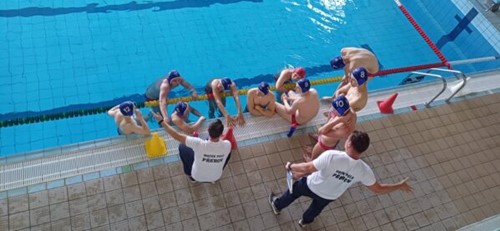
My biggest hobby and passion is water polo. I still play actively in a first-league men’s team in Přerov, I coach youth teams, and as a club executive, I am involved in its operation. I am also active in the youth section of the Czech Water Polo Association. And the best way for me to recharge is also hiking and cycling.
Learn more on www.optickyklastr.cz
Contact person: Petr Prikryl, CEO